Applied Behavioral Analysis
What is ABA?
Evidence-Based Care for
Every Child’s Success
Personalized Support for
Meaningful Progress
FAQ's
What does ABA look like?
At ELFE, we reap the benefits of an inclusive educational environment. Our students receiving 1:1 support have access to a classroom of typically developing peers throughout the day. This gives the student access to peer models and a robust and engaging classroom schedule. Our team of trained behavior technicians will support your child throughout their day, assisting them with participation as much as they are able while employing carefully planned strategies to help your child develop the skills to participate more fully in these activities. Sometimes pre-teaching may be necessary, and the technician may work 1:1 with your child in a quiet and undistracting area to help the child focus on very specific skills. Other times, your child may be working on skills in the natural environment. Our top priorities for your child will be those skills that will enhance their ability to learn independently: communication, social, and play skills. We will also target skills that will lead to age-appropriate independence, such as fine and gross motor skills, and adaptive skills like toileting or eating.
What does ABA mean at ELFE?
Our focus is teaching the child skills that will help them continue to learn from their environment when we are not present. A critical piece of ABA involves using objective data to drive decision-making about an individual’s program. If the child isn’t making progress, we change the strategy we are using to teach that skill. Some of the strategies are simple and are probably things you do naturally now and then. However, in an ABA program, we will use a strategy thoughtfully and consistently, and we will check to make sure it is working; this will help maximize your child’s opportunities for success.
What insurance do you take?
We are currently in network with Tricare, Blue Cross Blue Shield, and United. We also accept other private insurance, such as Aetna and Moda, and Medicaid. Families with other insurance companies are encouraged to call and inquire about coverage.
What is my role?
Parents are integral to the success of each child. Early Learning for Everyone strives to include parents in all aspects of therapy, from goal and objective development to treatment strategies and behavior management skills. If your child has behavioral excesses that are interfering with his or her daily living, we will develop a behavior intervention plan that will be used both in and out of therapy. Your job will be to implement this plan to the best of your ability to ensure its success. With this in mind, any behavior intervention plan will be designed in collaboration with parents and will be specifically designed around what you are comfortable and able to implement. We will talk more about your role as a parent as therapy begins and provide as much support as we possibly can, so don’t worry! We also offer one-on-one parent training.
How many hours of ABA therapy does my child need?
ELFE cannot predetermine the number of hours that your child may require from an ABA program. After the initial assessment, the BCBA will be able to make a recommendation as to how many hours are appropriate to meet the specific needs of the child. Our hour recommendations will not take into account insurance coverage or family’s desired hours; they are pure reflections of the student’s needs; however, actual service hours will obviously take these two factors into account
What about assessments?
Assessment is ongoing. In addition to 1:1 therapy sessions, ELFE may provide: integration of goals from other professionals (OT, PT, SLP), family training, and social skill groups as part of creating a comprehensive coordinated program for your child. Assessments will be chosen specifically for your child based on the BCBA’s determination of what will best measure progress and guide instruction. Feel free to ask your BCBA about the assessments that are chosen specifically for your child. The assessments most commonly used by ELFE are the PEAK Relational Training System and the VB-Mapp –Verbal Behavior Milestones, Assessment, and Placement Program.
How long does it take to conduct the assessment?
The assessment is conducted over one or two sessions, which are about one to two hours long. Duration of sessions will be determined by age, functioning level, and attention span of the child. Parents will often be interviewed as part of the assessment, and they are encouraged to share their concerns and to identify their priorities regarding the objectives for intervention. The assessment results will be used to develop the treatment program. This usually takes an additional five to ten hours in office time.
How long will it take before my child will speak/use the potty/stop throwing tantrums?
No professional can or should give you absolute guarantees about any aspect of your child’s development or behavior. We will use the science of ABA to collect data, which guides our decisions to select techniques and strategies that will assist your child in acquiring effective behaviors and skills for independence. We will use the regular meetings as a time to share information, raise questions or concerns, and plan intervention strategies. You can absolutely expect your child to show progress in the areas of his/her goals over time, and we will monitor the progress with regular data Collection.
Isn’t ABA just sitting at a table with flashcards?
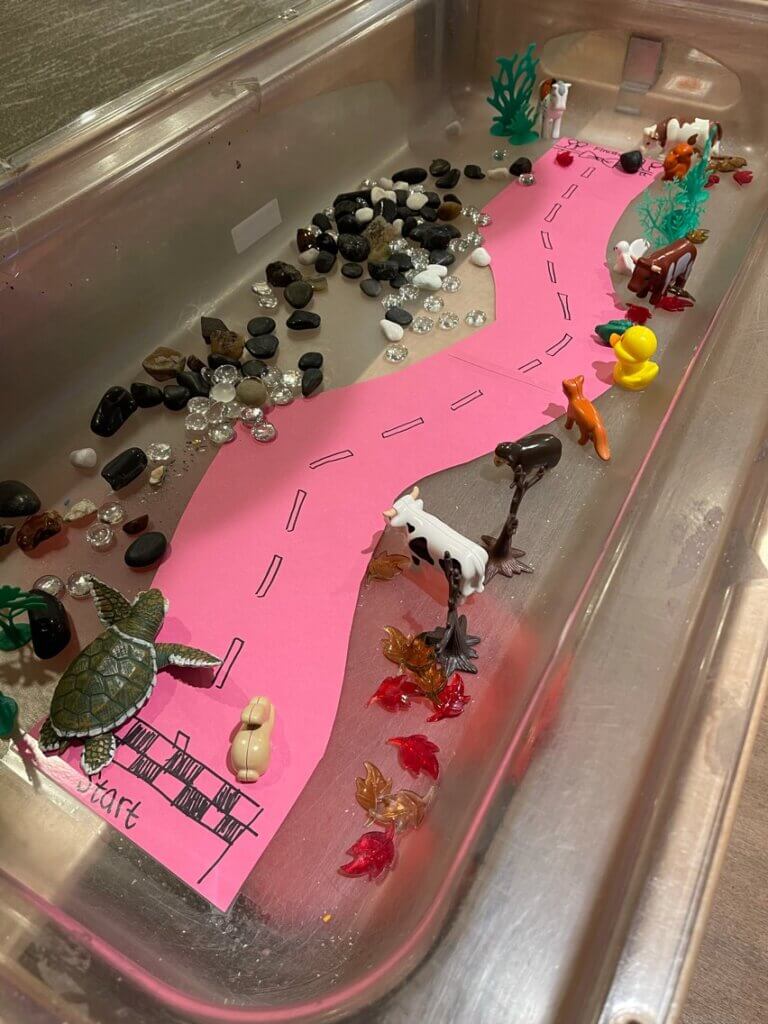
No! Many people’s only exposure to ABA is discrete trial training, which is often done at a table and involves repeated practice. DTT is just one tool used in ABA. ABA also includes strategies like natural environment training, which can be done anywhere. At ELFE, we don’t expect kids to sit and work at a table any longer than we would expect a typical child their age to enjoy doing that. This means a three-year-old might sit and work on a task for ten minutes or so, then move on to playing with a toy farm.
Is my child too young for ABA?
No! If your child is old enough to have a diagnosis, they are old enough to benefit from ABA. In fact, the earlier the better! At ELF,E we are early educators first, so we ensure activities and goals are developmentally appropriate for each child.
My child doesn’t have many behavior problems, do we need ABA?
Maybe! ABA isn’t just about reducing inappropriate behavior, although we definitely work on that. ABA can also be used to increase appropriate behavior and teach all kinds of important skills.